
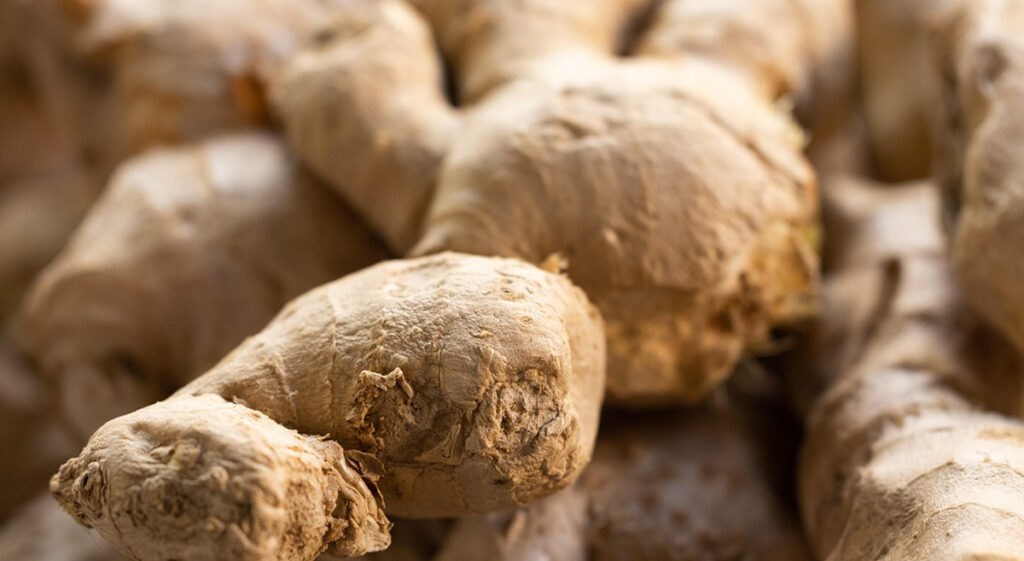
Ginger has been known for centuries for its warming and versatile properties.
Many people enjoy using it during cold days, for nausea, after meals, or whenever they need something warm for their throat and body.
The taste is powerful, spicy, and at the same time surprisingly fresh.
That is why, for many people, it is primarily a flavor enhancer in food.
Personally, I actually always have ginger at home. Sometimes fresh, always as dried powder, and often incorporated into homemade ginger syrup. Precisely because ginger is so versatile, I use it in all sorts of ways: in hot drinks, in dishes, or simply as a base for a quick ginger tea.
I find ginger syrup especially handy for that. You don’t have to cut fresh ginger every time, yet you still have the warm, spicy taste of ginger quickly at hand.
How can you use ginger syrup?
Ginger syrup is an easy way to add the flavor of ginger to hot and cold drinks or dishes. Because the syrup is ready to use, you can make something warming or refreshing in no time.
You can use ginger syrup, for example:
- in hot water as a quick ginger tea
- with sparkling water as a refreshing lemonade
- together with lemon and honey
- in mocktails or cocktails
- in yogurt or oatmeal
- as a flavoring in marinades, dressings, or Asian dishes
What can ginger syrup help with?
Ginger has been used for a very long time for its warming and soothing properties. Although it is not a miracle cure, many people find ginger pleasant for various everyday discomforts.
For digestion
Ginger is known for supporting digestion and can be pleasant for some people experiencing bloating or a heavy feeling after eating.
A tablespoon of ginger syrup, either pure or dissolved in warm water, is therefore often taken as a drink after a meal.
Why after a meal?
After a meal, people sometimes choose ginger for the warming sensation and possible support of digestion. Additionally, it is often combined with something sweet, making it simply a nice “finishing moment” to a meal.
For a sore throat or tickly cough
Due to its warming nature, ginger syrup is also often used for a tickly or sensitive throat. In combination with warm water, lemon, or honey, it can provide a soothing sensation.
During cold days
Ginger literally gives a warm feeling inside. That is why many people enjoy drinking it in autumn and winter, for example as an alternative to tea or soft drinks.
For nausea
Pure ginger is often used for nausea, such as motion sickness or an upset stomach. Ginger syrup is less concentrated and contains sugar, which is why some people find it more pleasant. Ultimately, it remains a matter of trying out what works for you.
Scientific research. Many claims are made about ginger, and it was used in Eastern medicine centuries ago. While studies into its effects have been conducted, they were performed in test tubes or on laboratory animals, not on humans. Furthermore, the substances in ginger, concentrate, or oil are often tested, rather than the ginger root itself. Therefore, more sound research would be needed to scientifically confirm all claims. Sometimes evidence is limited, or various studies are emerging with different outcomes, such as its effect on morning sickness during pregnancy.
If you wish to use ginger, or any herb for that matter, medicinally, always consult your doctor or specialist.
How do you make ginger syrup?
There are various ways to make ginger syrup, and you can vary the recipe yourself.
The ratio of 1:2:2 is often used for this syrup:
That is 250 grams of ginger : 500 ml of water : 500 grams of sugar.
And generally, a ratio of 1:1 or 1:2 sugar and water is used.
- 1:1 results in a thicker, sweeter syrup
- 1:2 results in a thinner, milder syrup
And then there are various methods. Personally, I always choose the slow method for my syrups. This way, you preserve the aromas and flavor better, especially when using leaves, flowers, and blossoms.
For roots, bark, or seeds, such as ginger, a decoction can work very well.
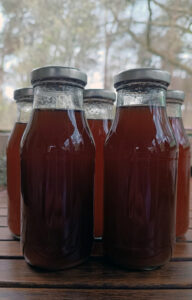
Recipe and method 1 - decoction
- 200 grams fresh organic ginger
- 500 ml water
- 250–500 grams (cane) sugar
- optional lemon
How to make:
-Wash the ginger and slice or grate it
-Simmer gently with water for 20–30 minutes
-Strain
-Add sugar and let it dissolve
-Pour into clean bottles*
Or
Heat the syrup to at least 80 degrees or bring it to a boil again
-Pour the syrup into sterile bottles, turn them upside down immediately, and place them on a cloth
-After a few minutes, you can set them upright and let them cool.
* If you are making the syrup for immediate consumption, you do not need to heat the mixture to at least 80 degrees. However, always pour it into a clean glass bottle or jar. You can pour boiling water over it beforehand or place them in boiling water.
Recipe and method 2 – infusion or extract
- 250 grams fresh organic ginger
- 500 ml water
- 250–500 grams (cane) sugar
How to make:
-Wash the ginger and slice or grate it
-Boil water and place it in a pan or glass jar together with the ginger
-Let it steep for 24 hours
-Strain
-Heat the extract and add sugar
-Stir regularly until all the sugar is dissolved.
-Pour into clean bottles*
OR
-Heat to at least 80 degrees or bring to a boil
-Pour the syrup into sterile bottles, turn them upside down immediately, and place them on a cloth
-After a few minutes, you can set them upright and let them cool.
Syrup has a shelf life of around 3 months.
Tips
-Some people prefer using honey instead of sugar.
-Add sugar only after boiling or if steeping is prolonged, because if the water is already saturated with sugar, it will absorb fewer flavors from the plants or flowers.
-The longer you let the ginger steep, the stronger the flavor.
-If you are making the syrup for immediate consumption, you do not need to heat the mixture to at least 80 degrees. However, always pour it into a clean glass bottle or jar. You can pour boiling water over them beforehand or place them in boiling water.
Ginger syrup versus ginger shot
Ginger shots have become popular in recent years. You can buy them ready-made or make them yourself. With ready-made versions, pay close attention to the ingredients, as they often contain a lot of apple juice or sugar.
Ginger shot:
Benefits::
highly concentrated
little or no sugar (in pure juices)
is often perceived as “powerful”
Disadvantages:
can be spicy for the stomach or throat
not everyone tolerates pure ginger well
easy to take too much at once
commercial varieties are often expensive and still contain a lot of sugar or juice
Please note: Many health claims regarding the immune system are not strongly scientifically proven in humans. With excessive consumption, this drink can actually cause stomach upset. It is even recommended not to consume more than 4 grams of fresh ginger per day to prevent stomach upset.
Ginger syrup
Benefits:
mild flavor
versatile in use
easy to dose
keeps well after opening
Disadvantages:
contains sugar
less concentrated than pure ginger
A ginger shot certainly doesn’t have to be “better” than syrup. It depends mainly on how you want to use it. Ultimately, it is mostly about balance, and perhaps also a bit about the convenience and commercialization surrounding ginger shots.
Personally, I mainly choose ginger syrup. Partly because I like working with organic ingredients and can decide for myself how sweet or strong to make it. Additionally, I find it a shame that some ready-made shots are very expensive, while they sometimes contain little ginger but instead a lot of water and sugar.
A few fun facts about ginger
- Ginger is not a root (although we do say ginger root), but a rhizome. This is an underground stem of the ginger plant.
- Ginger (Zingiber officinale) is related to turmeric and also to cardamom.
- It has been used for tens of thousands of years in Asian, Arabic, and Indian cuisine and medicine.
- The skin of ginger is very thin and you do not need to peel it.
- Fresh ginger tastes different from dried ginger.
- The sharp taste is due to the substance gingerol. This acts as a powerful antioxidant and anti-inflammatory.
- People who suffer from motion sickness can also hold a piece of fresh ginger in their mouth.
- Ginger combines well with lemon, cinnamon, and turmeric.
Why ginger syrup shouldn't be missing from your kitchen
For me, ginger syrup is truly one of those products that is always in the house. Not only because of the taste, but especially because you can use it in so many ways.
I regularly make ginger syrup myself and also experiment with other syrups. I do this on a small scale, simply because I enjoy working with pure ingredients and flavors. It is precisely that artisanal approach that makes it extra special to me.

My name is Jolinda. In my work, I combine energy work, intuitive reading, and coaching, and I guide people through tension, restlessness, and physical or emotional complaints — towards more peace, balance, and connection with themselves.
In my blogs, I share insights and inspiration regarding awareness, lifestyle, nutrition, and relaxation.
If you feel this suits you or if you would like to delve deeper into this. you are welcome to get in touch.