

We all know that too much sugar is unhealthy. But why is that? Is sugar really addictive, or is that a myth? Should you completely eliminate it from your diet? And what about natural sugars—should you be careful with those too?
There’s a lot to say about sugar: types, natural versus added sugars, functions, risks, and alternatives.
In this blog, I’ll walk you through what sugar actually is, why we love it so much, and why it can be difficult to stop at just one cookie or piece of candy.
The good news? Your body actually needs it, so you don’t have to cut it out completely.
Sugar, regardless of its source, provides glucose that your body uses for energy. However, added sugars in for example sweets and drinks affect your health differently than sugar in a piece of fruit.
The problem is that we often consume too much, and the wrong kinds, which can be harmful and contribute to various diseases.
As problem is that added sugar is very common in our modern diet and often “hidden” in many store-bought products.
What is sugar?
Sugar is a type of carbohydrate and an important energy source for your body.
It naturally occurs in many foods, such as fruits and vegetables.
Sugars provide calories and also have a protein-sparing effect:
proteins are the main building blocks of your body. When you consume enough carbohydrates, they are used for energy instead of protein. Protein’s essential role is building muscle tissue and producing hormones.
Types of sugar
Not all sugars are the same, and there’s often confusion between carbohydrates and sugar.
Simply put:
Sugar is a carbohydrate, but not all carbohydrates are sugars.
Carbohydrates are a broad category that includes sugars, starches, and fibers.
The simplest forms of sugars are monosaccharides: glucose, fructose, and galactose.
Then you have disaccharides (when you combine two molecules of monosaccharides), such as sucrose (our table sugar), lactose, and maltose. This is still a simple form.
Starch and fiber are complex multiple carbohydrates because they are made up of three to hundreds of sugar molecules.
And these are digested more slowly than simple or double sugars.
Good to remember:
All bad sugars are simple sugars, but not all simple sugars are bad.
It depends on the source.
Fruits, vegetables, beans, nuts and whole grains contain simple sugars. When simple sugars are naturally found in whole food, they come with vitamins, minerals, protein, phytochemicals and fiber. Simple sugars are found in fruits, honey, sweets, honey, candies, white bread, white rice and soft drinks, and complex carbs are basically all the starchy plant-based foods like beans, lentils, potatoes, brown rice, whole wheat etc.
When any type of sugar is added to foods during processing, cooking or at the table, you consume calories without any nutrients or fiber, and for that it is called ‘bad sugar’.
A short piece of theory about how sugar is processed in the body
During digestion, simple sugars and complex starches are broken down into individual glucose molecules. Because starch contains more sugar molecules, digestion takes longer and it therefore enters the bloodstream more slowly.
Simple sugars are absorbed quickly and cause a spike in blood sugar levels.
And glucose is absorbed into the blood through the intestinal wall. As a result, the blood glucose level rises.
Added sugars (such as sucrose and high-fructose corn syrup) contain a lot of calories, but NO essential nutrients. That is why they are also called “empty” calories.
Sugar contains no proteins, essential fats, vitamins, or minerals… just energy.
And this is where the big problem comes into play: generally speaking, we eat a lot of processed food containing a lot of added sugar.
Health risks of sugar
These empty calories add up quickly and can lead to weight gain.
When sugar enters your bloodstream, your pancreas produces insulin, allowing sugar to enter your cells. Over time, cells can become resistant to insulin, increasing the risk of type 2 diabetes.
Extra sugar also causes an increase in triglycerides, which contributes to cardiovascular disease.
When consuming added and simple sugars, you experience a rapid peak followed by a quick sugar crash.
This disrupts your blood sugar, which in turn often leads to ‘cravings’ that frequently consist of empty, simple sugars.
In addition to the risks mentioned above, sugar is also not really good for your teeth because it feeds bacteria that attack your tooth enamel, increasing your risk of cavities and gum problems.
Why is sugar addictive?
Okay, some more theory:
When you eat sugar, your brain produces dopamine. Dopamine is perhaps best known for its role in the reward system in your brain.
It used to be thought that dopamine itself was responsible for a feeling of pleasure from exciting things like sex, drugs, alcohol, and fast food. To be honest, I thought that was the case. But other substances are responsible for that, such as the body’s own opioids.
Research has shown that dopamine actually makes you do ‘fun’ things more often. It plays a role in cravings or urges. And what I also find interesting is that it plays a role in making choices: does the reward outweigh the effort I have to put in?
So, dopamine ensures that you remember what is tasty, easy, and pleasant. And then you want more.
And the thing is, sugar provides very easily and quickly a reward!
So it’s not that strange if you like eating sugar. And now you also know that it isn’t a form of weakness, in case you thought of yourself as someone who couldn’t stay away from those cookies, soda, or candy!
When is sugar good for you?
Long ago—think prehistoric times—sugar had a clear purpose.
You needed the calories for hunting, fleeing, hard work on the land, and a desire to make love for offspring.
In other words, dopamine helped increase the chance of survival.
Some researchers believe that our preference for sweets is also related to those prehistoric times: sweet food provided energy and was safe, while bitter food was poisonous.
Nowadays, there is food in abundance, and a lot of food has added sugars. The point is that our brains apparently still function the way they did in prehistoric times. And then it is quite difficult to exercise moderation.
And even now, sugar certainly still has a function, because your body converts sugar (glucose) into energy. These simple sugars are quickly converted into energy, which you can make good use of, for example, during intense exertion, sports, or in cases of low blood pressure.
Sugar is also a fuel for your brain. When your blood sugar is too low, you quickly notice that you are tired, dizzy, and less alert and sharp.
Sugar also aids in recovery. Sugars from fruits and vegetables can support your immune system in fighting pathogens. And after surgery, your body needs extra energy, which it obtains primarily from carbohydrates.
BUT; too much added sugar can promote inflammation in the body and actually slow down the recovery process.
Practical tip on how to eat less sugar
Consuming less sugar starts with knowing where it is found, which sugars are bad, and where complex sugars are present, and then you gradually reduce your intake.
Your body adapts much more easily, which means you also experience fewer withdrawal symptoms and cravings. Less sugar really starts to taste normal all by itself.
Gain insight
To start, check how often and how much sugar you add to your food and drinks yourself.
And keep track of how often you eat and drink processed foods, which are likely full of added sugar and therefore contain empty calories.
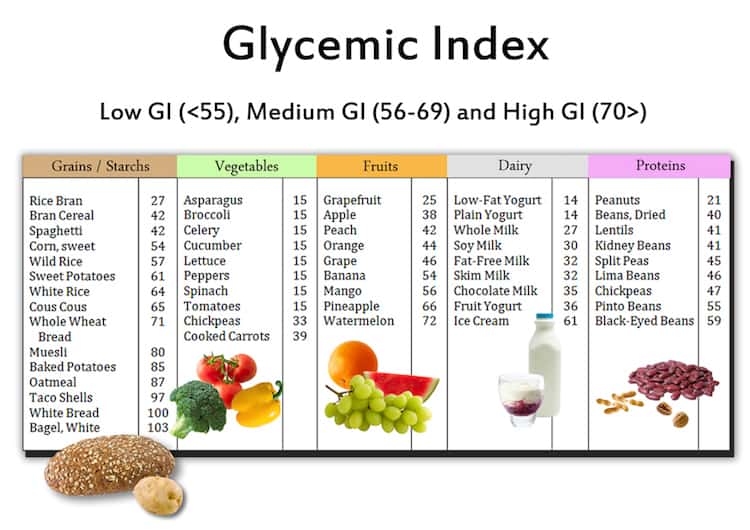
Work with a glycemic index (GI)
This is an index that ranks carbohydrates in food relative to their effect on blood sugar levels.
Most important rule: eat carbohydrates with a low GI (55 or lower). These are digested, absorbed, and metabolized more slowly. As a result, blood sugar levels rise less rapidly, and less insulin is needed to counteract the rise.
These are mainly vegetables.
(Yes, I know!! But the more low-GI foods you eat, the easier it is to balance that a piece of chocolate or a glass of wine 🙂 )
Carbohydrates with a GI value of 70 or higher are absorbed quickly and cause a faster rise in blood sugar levels. As a result, more insulin is required.
Choose natural sugars
Think of fruit, dates, and for example cinnamon or vanilla for a sweeter taste. You can also use honey, but use that in moderation as well.
Read labels carefully
You don’t always see ‘sugar’ listed on packaging, but you will find it under the words: glucose, fructose, syrup, dextrose
Choose sugar-free drinks
Softdrink is a real sugar bomb, but fruit juice also contains a lot of sugar, both natural and sometimes added sugars.
Use sugar consciously
For example after exercise, or choose a banana instead of a cookie during an energy dip
Are alternatives to sugar better than white granulated sugar?
Yes – and no.
If you really want to add sugar, you can try stevia, honey, coconut sugar, raw cane sugar, brown sugar, or agave syrup instead of white sugar.
Differences and similarities:
White granulated sugar and cane sugar both consist of almost 100% sucrose and both provide 4 calories per gram.
Cane sugar is a disaccharide (glucose and fructose), and honey consists mostly of individual glucose molecules (around 30%) and fructose (40%), water (around 17-20%), and a small amount of enzymes, pollen, and minerals.
The molecular structure differs only slightly, and as a result, your body processes granulated sugar, cane sugar, and honey in virtually the same way.
Coconut sugar is not substantially healthier than regular sugar either. Although it contains slightly more minerals (iron, potassium) and has a lower glycemic index (meaning a less rapid spike in your blood sugar), it remains virtually the same as regular sugar in terms of calories and sugar content.
And the same applies to agave syrup; it contains a lot of fructose and has a slightly lower glycemic index.
Researchers still disagree on whether sweeteners such as aspartame and Splenda are good alternatives to sugar, or are actually toxic and even worse than sugar.
And then there is stevia. The leaves of the stevia plant contain steviol glycosides, which taste 200 to 300 times sweeter than regular sugar. Stevia is low in calories and heat-resistant, making it suitable for baking cakes, for example. It is also said to have no effect on your blood sugar levels. However, it does have a somewhat bitter aftertaste and is very expensive, making it less popular. And despite being natural, the sweetener is obtained via an extraction process, and the use of pure, unprocessed stevia leaves in food is not permitted by EU legislation. Finally, the EFSA (European Food Safety Authority) states that a maximum of 4 mg per kilogram of body weight is safe.
Conclusion: alternatives are not necessarily healthier than regular white sugar because your body processes them in the same way. Some have a slightly lower glycemic index. The difference lies mainly in the taste and your personal preference for less processed food, or whether or not you want to use honey.
Personally, I always use organic fairtrade cane sugar for my syrups, for example. After having tried various recipes, this is the best choice for me. And if possible, I always choose organic products and buy directly from the farmer or Fairtrade.
And for my homemade liqueurs, I use granulated sugar because it gives the best flavor.
Sometimes a little sugar is simply necessary for the taste or to extend the shelf life.
Is sugar a sweet tempter?
Yes, but it isn’t necessarily bad. After all, your body needs sugar too.
But the temptation lies in the fact that you quickly consume too much. And added empty sugars provide only calories and no nutrition.
Too much sugar is harmful, but at the right time, it is beneficial.
And remember:
All bad sugars are simple sugars, but not all simple sugars are bad. That depends on the source.
In other words: choose consciously and enjoy.
If you are unsure whether you have diabetes, make an appointment with your GP for a blood test.

My name is Jolinda. In my work, I combine energy work, intuitive reading, and coaching, and I guide people through tension, restlessness, and physical or emotional complaints — towards more peace, balance, and connection with themselves.
In my blogs, I share insights and inspiration regarding awareness, lifestyle, nutrition, and relaxation.
If you need guidance or would like to explore the possibilities for you regarding lifestyle, you are welcome to get in touch.
Did you find this interesting to read? You are welcome to subscribe to my monthly newsletter with inspiration on lifestyle and conscious living.